
The Crucial Role of Continuous Environmental Monitoring in Pharmaceutical Manufacturing
Introduction
In the highly regulated pharmaceutical industry, ensuring the safety, purity, and efficacy of products is non-negotiable. One essential component of maintaining these standards is Continuous Environmental Monitoring (CEM). This proactive approach plays a vital role in maintaining compliance, reducing contamination risk, and supporting product quality throughout the manufacturing process.
What Is Continuous Environmental Monitoring (CEM)
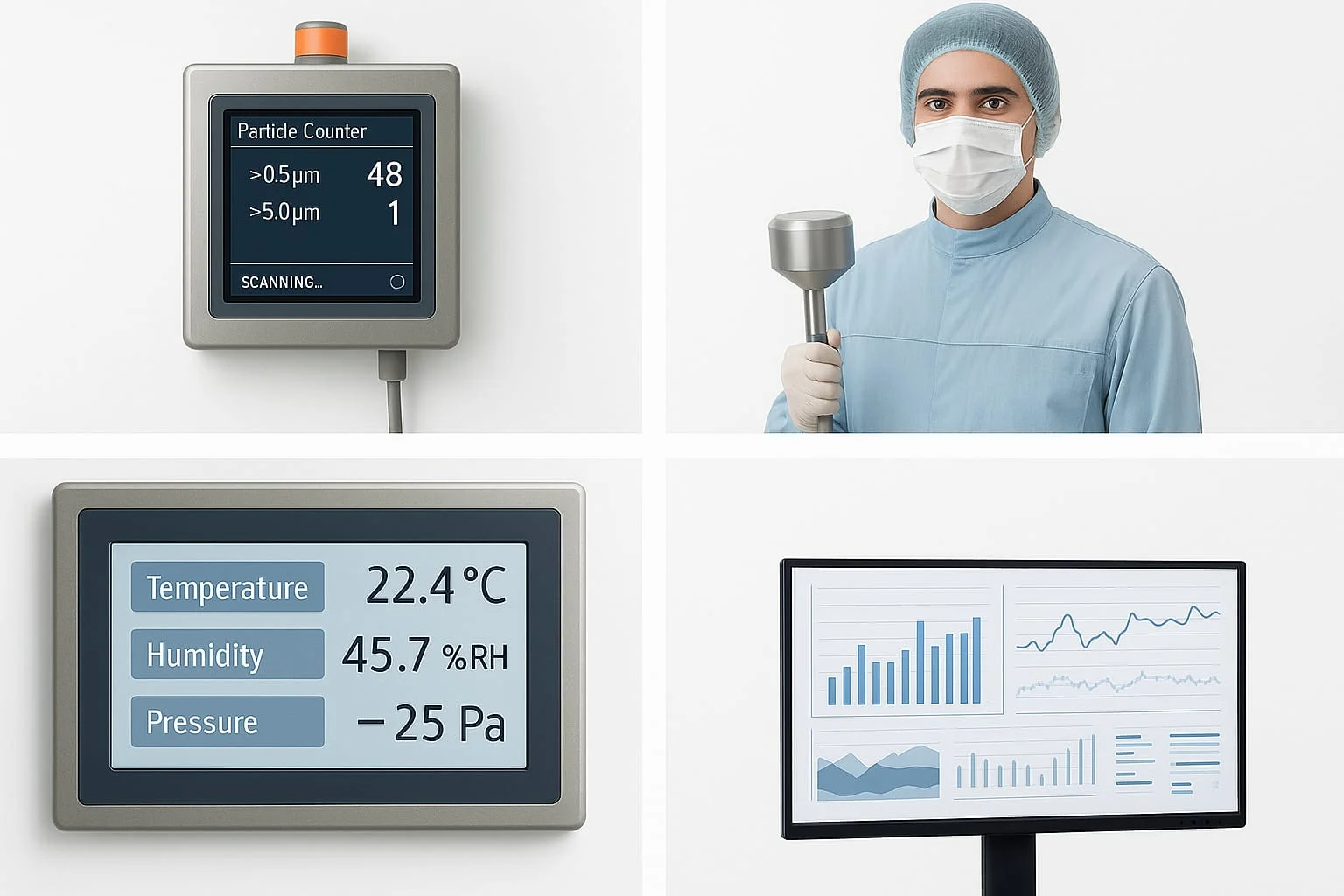
Continuous Environmental Monitoring refers to the real-time collection and analysis of environmental data—such as temperature, humidity, airborne particulates, and microbial contamination—in pharmaceutical manufacturing areas. These conditions must be tightly controlled, especially in cleanrooms and sterile processing environments.
CEM systems are typically used to:
-
Monitor cleanroom conditions continuously.
-
Detect deviations from specified environmental thresholds.
-
Provide alerts for corrective actions.
-
Generate compliance-ready reports for audits and inspections.
Why is CEM Essential in Pharma
- Regulatory Compliance
Regulatory bodies like the FDA, EMA, and WHO demand strict control of manufacturing environments, especially for aseptic processing. Annex 1 of the EU GMP guidelines specifically emphasizes the need for continuous monitoring in critical areas.
Non-compliance isn’t just a matter of fines—it can halt production, lead to recalls, or damage a company’s reputation irreparably.
- Risk Reduction
CEM provides early warnings for deviations or excursions. For example, a spike in particle counts could indicate a filter failure or human error. By catching anomalies in real time, manufacturers can prevent contamination before it affects products or processes.
- Data Integrity and Audit Readiness
With 21 CFR Part 11 and ALCOA+ principles in mind, CEM systems are designed to ensure secure, accurate, and retrievable data. This digital paper trail is indispensable during regulatory inspections or internal audits.
- Operational Efficiency
CEM reduces the manual burden on quality and production teams. Automated alerts, trend analysis, and predictive maintenance insights all contribute to more efficient processes and fewer downtime events.
Best Practices for Implementing a CEM System
-
Risk-Based Approach: Focus monitoring efforts on high-risk zones (e.g., aseptic filling lines, Class A/B cleanrooms).
-
Data Integrity: Ensure systems are validated, secure, and compliant with data integrity principles (ALCOA+).
-
Training and SOPs: Staff must be trained to interpret and respond to monitoring data.
-
Regular Maintenance and Calibration: Ensure accuracy and reliability of sensors and devices.
Key Parameters We Monitor at Truchemy
-
Temperature and Humidity: To ensure stability of APIs and finished formulations.
-
Differential Pressure: To prevent cross-contamination between cleanroom zones.
-
Non-viable Particulates: Using laser particle counters to measure air cleanliness.
-
Viable Microorganisms: Via active air samplers and settle plates in conjunction with continuous systems.
-
Airflow Velocity & Direction: For laminar flow validation and contamination control.
The Digital Edge: Smart Integration with Truchemy’s QMS
At Truchemy, our CEM system is fully integrated with our electronic Quality Management System (eQMS), creating a seamless feedback loop between environmental data and quality processes. Any deviation automatically triggers a record in the QMS, ensuring traceability and audit readiness. With cloud-based dashboards and real-time alerts, our teams can monitor cleanroom performance from anywhere.
Looking Ahead: AI and Predictive Analytics in CEM
Truchemy is exploring next-gen CEM capabilities, including machine learning models that predict environmental deviations before they happen. By correlating environmental data with manufacturing events, maintenance logs, and human activity, we aim to move from reactive control to proactive prevention.
Conclusion
In pharmaceutical manufacturing, the environment is as critical as the product itself. Continuous Environmental Monitoring ensures that every pill, vial, or syringe is produced in conditions that meet the highest standards of safety and quality. Investing in a robust CEM system is not just about compliance—it’s about protecting patients and building trust in the brand.