
Ensuring Data Integrity in Pharma: The Role of Calibration Management Systems
Introduction
In the pharmaceutical industry, precision is not just a goal—it’s a mandate. From research and development to manufacturing and packaging, every step in the lifecycle of a pharmaceutical product must adhere to strict regulatory standards. Calibration of instruments and equipment plays a crucial role in ensuring product quality, safety, and compliance. That’s where Calibration Management Software (CMS) becomes indispensable.
What is Calibration Management Software
Calibration Management Software is a digital tool designed to schedule, track, and document the calibration of equipment and instruments. It helps companies maintain accurate records, streamline calibration workflows, and ensure full traceability—a critical requirement for regulatory audits.
Key Features of a CMS for Pharma
-
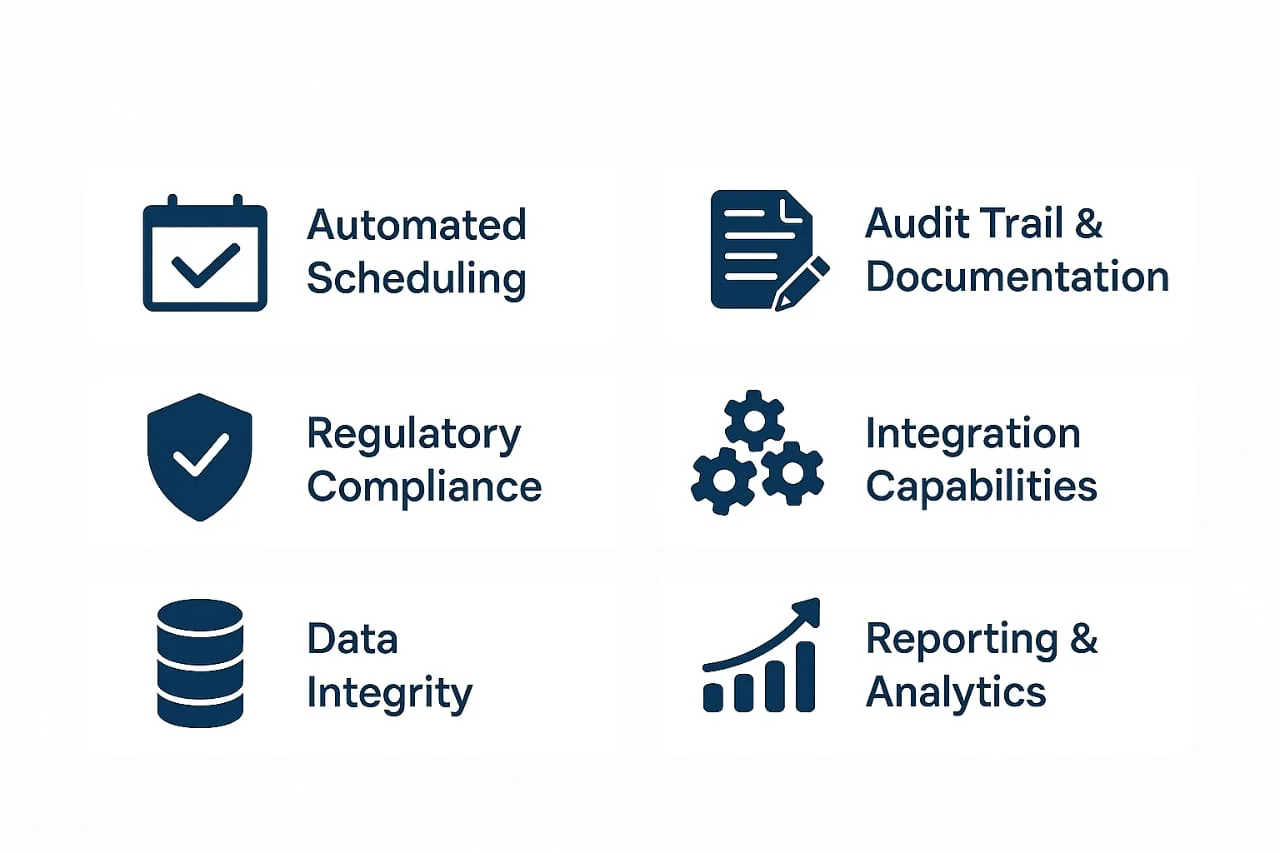
Automated Scheduling: Ensures timely calibration by sending alerts and reminders.
-
Audit Trail & Documentation: Provides a complete history of calibration activities, including who performed them and when.
-
Regulatory Compliance: Aligns with standards like 21 CFR Part 11, ISO/IEC 17025, and GMP.
-
Integration Capabilities: Interfaces with other systems like LIMS, ERP, and CMMS.
-
Data Integrity: Ensures data is complete, consistent, and protected from unauthorized access.
-
Reporting & Analytics: Generates calibration certificates, deviation reports, and trend analyses to support continuous improvement.
Why Calibration Matters in Pharma
Pharmaceutical products must meet strict quality standards to ensure patient safety and product efficacy. Any deviation in equipment accuracy can lead to:
-
Batch failures
-
Regulatory non-compliance
-
Product recalls
-
Damage to brand reputation
-
Legal consequences
Therefore, regulatory agencies like the FDA, EMA, and WHO require pharmaceutical companies to maintain validated, calibrated equipment with complete traceability and documentation.
The Truchemy Approach: Leveraging CMS for Operational Excellence
At Truchemy, our deployment of Calibration Management Software isn’t just about compliance—it’s about driving operational excellence. Here’s how:
- Centralized Data, Decentralized Access
With a cloud-based CMS platform, Truchemy ensures that calibration records are accessible from all global manufacturing units. Whether it’s a technician in Hyderabad or a quality officer in Munich, everyone accesses the same version-controlled data in real-time.
- Automated Scheduling and Notifications
Gone are the days of missed calibrations due to human error or outdated spreadsheets. Our CMS auto-generates calibration schedules based on instrument type, usage frequency, and historical data—keeping our team on track and compliant.
- Paperless, Audit-Ready Documentation
Our calibration certificates, test results, and deviations are digitally logged and traceable. This not only accelerates internal reviews but also makes Truchemy audit-ready at any moment—a critical advantage during unannounced inspections.
- Regulatory Alignment
Our CMS is fully validated under 21 CFR Part 11 and Annex 11 guidelines, ensuring electronic records and signatures are secure, authenticated, and compliant. This gives regulators confidence in our data integrity and gives Truchemy a competitive edge.
- Continuous Improvement Through Analytics
With built-in analytics, we can spot trends like recurring out-of-tolerance instruments or technician-specific errors. This helps us take preventive actions and maintain our standard of “right the first time, every time.”
The Results: What Truchemy Has Achieved
Since implementing Calibration Management Software, Truchemy has seen measurable improvements:
-
30% reduction in calibration-related deviations
-
40% faster audit response time
-
95% on-time calibration rate across all facilities
-
Increased regulatory inspection success rate
These outcomes aren’t just metrics—they reflect our deep commitment to quality, efficiency, and above all, patient safety.
Integration with Quality Systems
Calibration activities are not standalone; they intersect with other GxP processes like validation, maintenance, and quality control. Therefore, a well-integrated CMS can enhance cross-functional collaboration and eliminate data silos. For example:
-
Integrating CMS with QMS ensures out-of-tolerance events trigger investigations or CAPAs.
-
Linking with LIMS or MES ensures only calibrated equipment is used in critical processes.
Final Thoughts
Calibration Management Software is not just a digital upgrade—it’s a strategic investment in quality, compliance, and operational excellence. For pharmaceutical companies aiming to maintain competitive advantage and regulatory compliance, CMS is an essential component of a modern quality management system.