
Understanding the Life Sciences Industry Is Evolving with Technology and AI
The life sciences industry is undergoing a transformative era driven by technological innovation, data integration, and a growing emphasis on personalized medicine. From biotechnology firms developing gene-editing therapies to pharmaceutical companies harnessing AI for drug discovery, the sector is rapidly evolving to meet global health challenges. Regulatory landscapes are adapting to accommodate novel treatments, while collaborations between academia, startups, and established players are accelerating the pace of research and development. As populations age and demand for targeted therapies increases, the life sciences industry is positioned at the forefront of innovation in healthcare and human wellbeing.
Key Sectors in Life Sciences
Pharmaceuticals
India’s pharmaceutical industry is a global leader, valued at approximately $50 billion in FY 2023-24 and projected to reach $130 billion by 2030. The country is the world’s largest provider of generic medicines by volume, holding a 20% share of total global pharmaceutical exports. Additionally, India is the largest vaccine supplier globally, accounting for more than 60% of all vaccines manufactured worldwide.
Biotechnology
Biotechnology in India is rapidly advancing, with the global biotechnology market valued at $449 billion in 2019 and expected to grow to $727.1 billion by 2025. India ranks among the top 12 global destinations for biotechnology, with strong capabilities in biopharmaceuticals, bio-agriculture, and bio-industrial products.
Medical Devices
The medical devices sector is experiencing significant growth, driven by increasing healthcare needs and technological advancements. India is emerging as a hub for medical device manufacturing, with a focus on innovation and affordability to cater to both domestic and international markets.
Research & Development
Research and development are central to the life sciences industry, fostering innovation and the development of new therapies and technologies. India boasts a skilled workforce of scientists, researchers, and healthcare professionals, contributing to the country’s growing prominence in global R&D efforts.
What Is the Life Sciences Industry
Truchemy Pharmaceuticals’ commitment to leveraging scientific research and technological advancements to improve healthcare outcomes.
India holds a prominent position in the global life sciences sector, serving as a major hub for pharmaceutical manufacturing and biotechnology research. The country is renowned for producing affordable generic medicines and vaccines, making significant contributions to global public health.
Life sciences involve the study and application of biology to solve problems in healthcare, agriculture, environmental science, and more. The industry is made up of companies and research institutions that develop products and technologies to:
-
Prevent and treat diseases
-
Improve patient care
-
Advance public health
-
Innovate sustainable and bio-based solutions
Current Trends Shaping the Industry
1. AI-Powered Drug Discovery and Development
Artificial intelligence (AI) is revolutionizing drug discovery by analyzing vast datasets to identify potential therapeutic targets and predict patient responses. Machine learning algorithms are streamlining clinical trial designs and optimizing drug development processes, significantly reducing time-to-market for new therapies.
2. Expansion of Cell and Gene Therapies
Advancements in CRISPR gene editing, CAR-T therapies, and stem cell technologies are enabling the development of treatments for previously untreatable diseases. The commercialization of cell and gene therapies is accelerating, although challenges in manufacturing scalability and regulatory approval remain.
3. Telehealth and Remote Patient Monitoring
The integration of wearable devices, sensors, and AI facilitates real-time monitoring of patients outside traditional healthcare settings. This approach enhances patient outcomes and improves healthcare delivery efficiency, particularly for chronic disease management.
4. Real-World Data (RWD) Utilization
Real-world data, sourced from electronic health records, wearable devices, and insurance claims, is increasingly used to inform drug development and regulatory decisions. RWD provides insights into how therapies perform in everyday clinical settings, complementing traditional clinical trial data.
5. Sustainability and Green Manufacturing Practices
The industry is prioritizing sustainability by adopting green manufacturing processes, such as enzymatic biocatalysis and solvent-free synthesis. Regulatory agencies are emphasizing environmental compliance, pushing organizations to implement eco-friendly practices and invest in carbon-neutral facilities.
6. Personalized and Precision Medicine
Advancements in genomics and biomarker discovery are enabling the development of personalized treatment plans tailored to individual genetic profiles. This approach enhances treatment efficacy and reduces adverse drug reactions, particularly in managing chronic conditions like cancer and diabetes.
7. Decentralized Clinical Trials (DCTs)
The COVID-19 pandemic accelerated the adoption of decentralized clinical trials, utilizing remote monitoring, home health providers, and direct-to-patient drug distribution. DCTs offer greater patient accessibility and convenience, though they require specialized expertise and infrastructure.
8. Blockchain for Data Security and Integrity
Blockchain technology is being explored to enhance data security and integrity in clinical trials, supply chain management, and patient records. Its decentralized nature ensures transparency and traceability, addressing concerns over data tampering and unauthorized access.
9. Science Entrepreneurship and Commercialization
There is a growing emphasis on translating scientific research into commercial products and services. Biotech incubators and increased investment in research commercialization are fostering entrepreneurship, leading to innovative solutions in public health.
10. Regulatory and Policy Shifts
Governments are implementing policies to encourage domestic pharmaceutical manufacturing. For instance, Gilead Sciences announced an $11 billion investment in U.S. manufacturing and research, responding to tariff policies aimed at reshoring production.
Challenges to Innovation
1. Regulatory Complexities and Variability
Divergent regulatory requirements across regions can create uncertainty and delays in drug development and approval processes. For instance, varying interpretations of International Council for Harmonisation (ICH) guidelines among regulatory bodies can lead to inconsistent expectations and prolonged timelines for innovative therapies.
2. Eroom’s Law: Rising Development Costs
Despite technological advancements, the cost of developing new drugs continues to rise. Eroom’s Law observes that the inflation-adjusted cost of developing a new drug roughly doubles every nine years, contrasting with the exponential improvements seen in other technological sectors.
3. Patent Cliffs and Market Pressures
The expiration of patents for blockbuster drugs leads to a significant drop in sales, known as the “patent cliff.” This sudden revenue loss can deter investment in new drug development, as companies may focus on maximizing profits from existing products before patent expiration.
4. Fragmented and Inaccessible Data
The vast amount of healthcare data generated is often siloed across different institutions and formats, making it challenging to harness for research and development. This fragmentation hinders the ability to derive meaningful insights that could drive innovation in drug development.
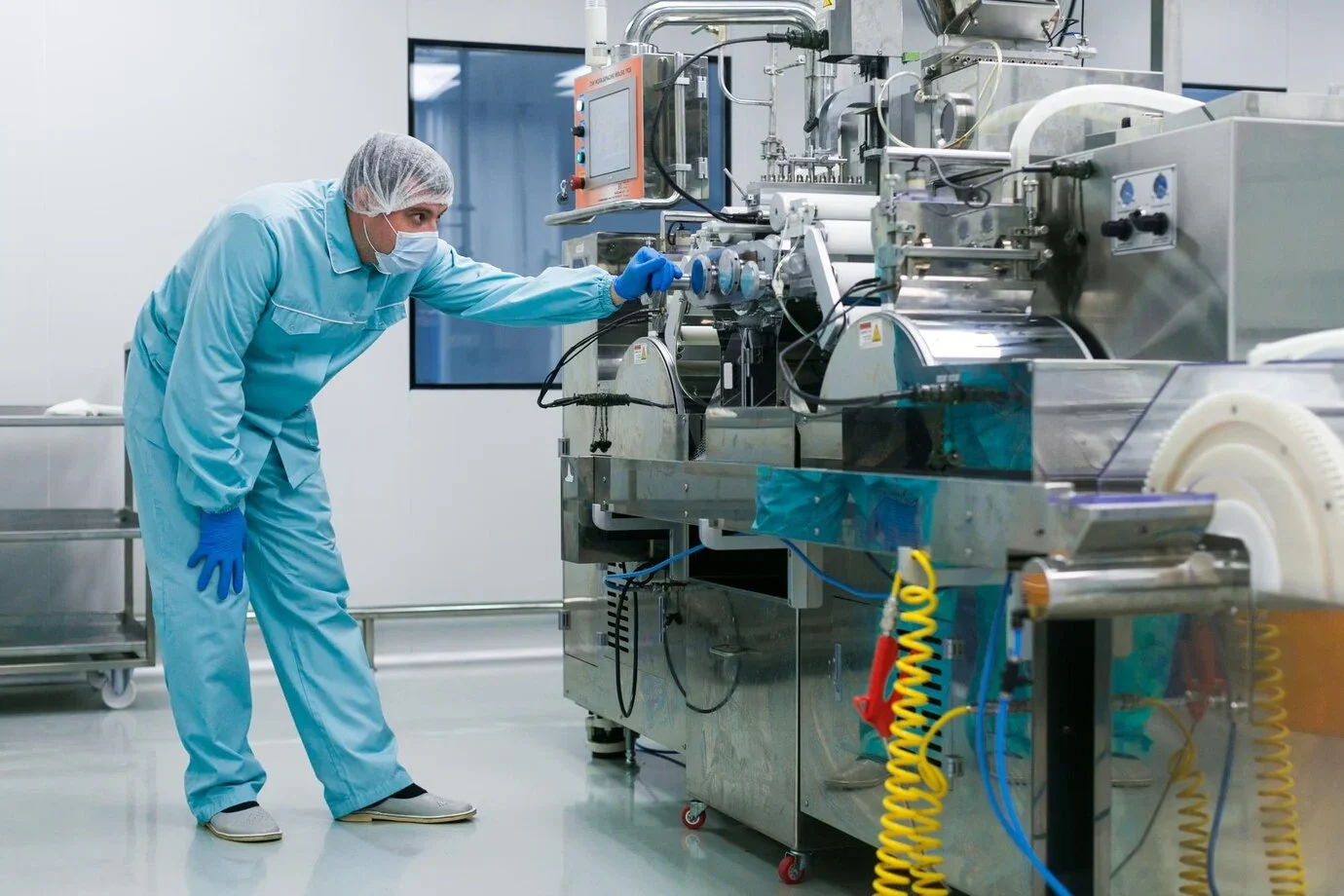
Pharmaceuticals in the Pharma Industry:
Types of Pharmaceuticals
Pharmaceutical products can be broadly categorized into:
-
Small-molecule drugs: Chemically synthesized drugs like aspirin or statins, usually taken orally.
-
Biologics: Large, complex molecules derived from living cells (e.g., insulin, monoclonal antibodies).
-
Vaccines: Biological preparations that provide immunity against diseases.
-
Advanced therapies: This includes gene therapies, cell therapies (like CAR-T), and RNA-based drugs (e.g., mRNA vaccines).
The Role of Biotechnology
Modern pharmaceuticals are increasingly driven by biotechnology. Biotech has enabled:
-
Personalized medicine based on genetic profiles
-
Targeted cancer therapies
-
Safer and more effective biologic drugs
Research and Development (R&D)
Pharmaceutical development is a long, costly, and complex process, often taking over a decade from discovery to market. It includes:
-
Drug discovery
-
Preclinical testing
-
Clinical trials (Phases I–III)
-
Regulatory approval (e.g., by FDA, EMA)
Regulatory and Safety Considerations
Pharmaceuticals must meet strict regulatory standards for safety, efficacy, and quality. Agencies like the U.S. FDA or the European EMA oversee this process, ensuring that all drugs are safe for public use.
Future of Pharmaceuticals
The future of pharma is shaped by:
-
AI-driven drug discovery
-
Precision medicine
-
Biologics and biosimilars
-
Global access and affordability
Conclusion: A Future Powered by Science and Innovation
The life sciences industry is driving revolutionary change in how we understand, treat, and manage health. With the convergence of biology, technology, and data science, the next decade promises even greater advancements—from curing genetic diseases to using AI for preventive care. Companies, governments, and research institutions must continue to collaborate to ensure that innovation translates into accessible and effective solutions for everyone.